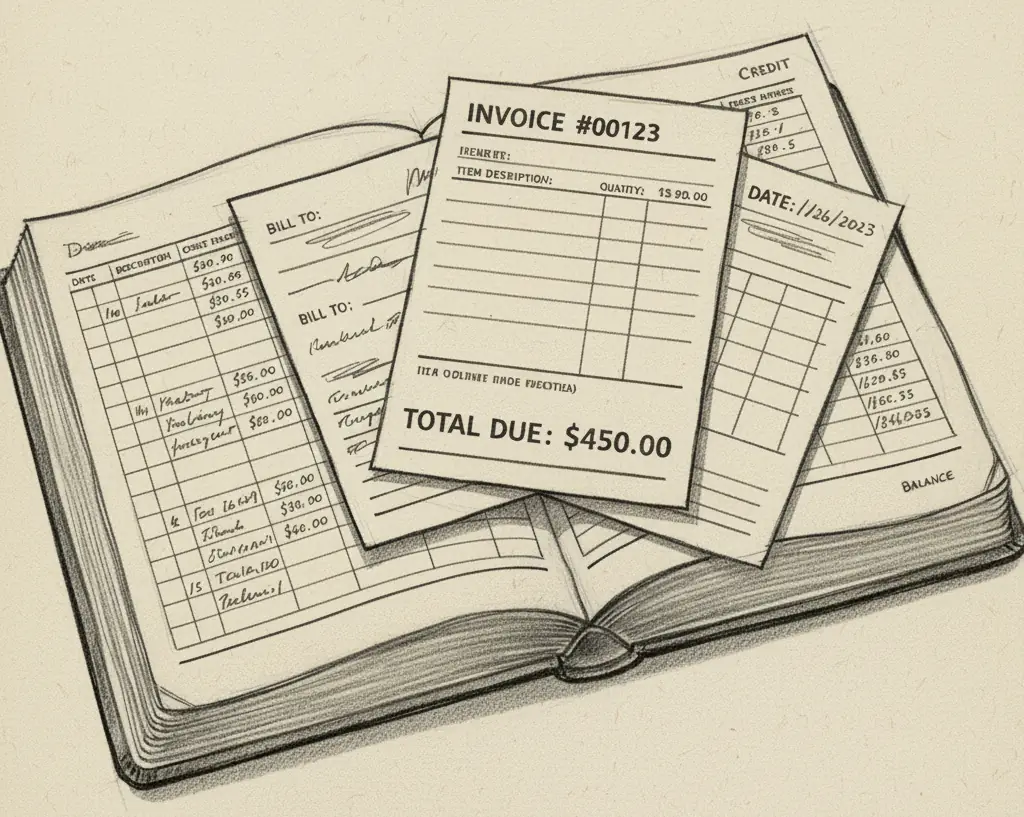
The Invoice Is Sent. Now the Real Work Begins.
April 20, 2026
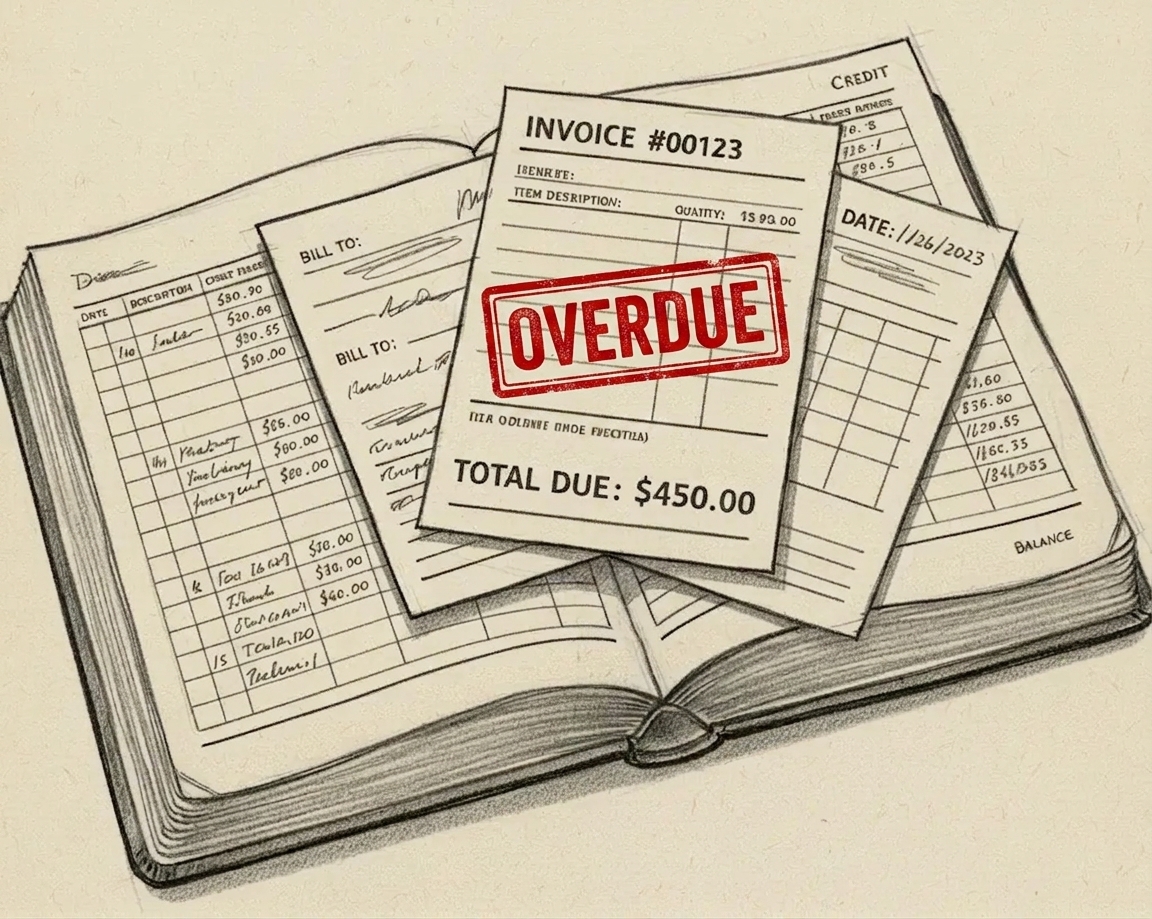
You’ve done the work. You’ve sent the invoice. Now you wait.
A week passes. Then another. The due date comes and goes. You start wondering whether to say something — and then talk yourself out of it, because the client relationship matters and you don’t want to seem pushy.
Meanwhile, the money you’ve already earned is sitting in someone else’s account.
This isn’t rare
Late payments are one of the most widespread and least talked-about problems in small business. According to recent figures, nearly half of all invoices sent by UK small businesses are paid late. Not occasionally. On average.
The Federation of Small Businesses estimates that 62% of small businesses are currently dealing with overdue invoices. The average amount owed? £21,400.
Across all UK small businesses, the total figure is £70.4 billion. That’s money that has been earned, invoiced, and not paid.
What it actually costs you
The obvious cost is cash flow. Late payments make it harder to pay suppliers, harder to invest in the business, and harder to plan anything with confidence. Around 44% of small business owners cite cash flow as their most pressing concern and late payments are a leading cause.
But there’s a second cost that gets less attention: the time you spend chasing.
UK small business owners spend an average of 86 hours a year chasing overdue invoices. That’s more than two full working weeks every year spent writing follow-up emails, making awkward phone calls, and checking whether payment has landed yet.
The Federation of Small Businesses puts the cost of that time at up to £5,200 per year per business. And that’s before you count the stress, the distraction, and the jobs you didn’t quote for while you were on the phone to a client who should have paid three weeks ago.
Why chasing feels so difficult
Part of the problem is the relationship. Most small business owners genuinely like their clients, and asking someone directly for money feels uncomfortable — especially if it’s a client you want to keep.
So the first chase gets delayed. Then the second one is softer than it should be. By the time you send anything firm, the invoice is six weeks overdue and you’re already quietly writing it off in your head.
The other part is simply time. When you’re running a business by yourself or with a small team, chasing invoices competes with everything else. It’s always the thing that gets pushed to tomorrow.
The result is that the businesses that most need prompt payment are often the ones least likely to chase it effectively.
The options
Most business owners handle late payments in one of three ways:
Do nothing and hope — the approach most commonly used, least effective, and most damaging to cash flow.
Chase manually — emails, phone calls, letters. Effective when done consistently, but time-consuming, uncomfortable, and easy to let slip.
Use a debt collection service — fine for invoices that are seriously overdue, but heavy-handed for routine late payments, and not something most clients respond well to.
What most businesses don’t have is a system that chases automatically, professionally, and at the right intervals — without anyone having to remember to do it.
What automation looks like in practice
The late payment chasing workflow I built connects directly to an invoicing system and runs every morning at 8am. It checks for overdue invoices, works out how long each one has been outstanding, and sends the appropriate reminder without anyone lifting a finger.
Reminders escalate in tone based on how long the invoice has been overdue. A friendly nudge goes out on day one — just in case it slipped through. A polite follow-up at day seven. A direct request at day fourteen. A final notice at thirty days.
Each reminder is sent once, automatically logged, and never duplicated. The system checks what’s already been sent before it does anything — so clients don’t receive the same email twice, and you always have a clear record of when each reminder went out.
The email wording is fully editable. If your tone is more formal, or you want to soften the day-one message, that’s a straightforward change with no technical knowledge required.
The numbers
Manually chasing invoices costs the average small business up to £5,200 a year in lost time. Automating it costs a fraction of that to set up and nothing to run once it’s in place.
More importantly, businesses that chase promptly and consistently get paid faster. Not because clients suddenly become more ethical — but because a timely, professional reminder removes the easy excuse of “I forgot” and makes it clear that you’re keeping track.
Is this something your business could use?
If you’re spending time every month chasing invoices that should already have been paid, this kind of automation is worth looking at. The flip side — recording the supplier invoices that come in — is automated by the same kind of workflow.
If you want this set up and managed for you, the Late Payment Chasing product page has the pricing and what’s included. The full technical write-up is in my portfolio if you want to see exactly how it works.
Or get in touch for a no-cost, no-obligation chat about whether it makes sense for your business.